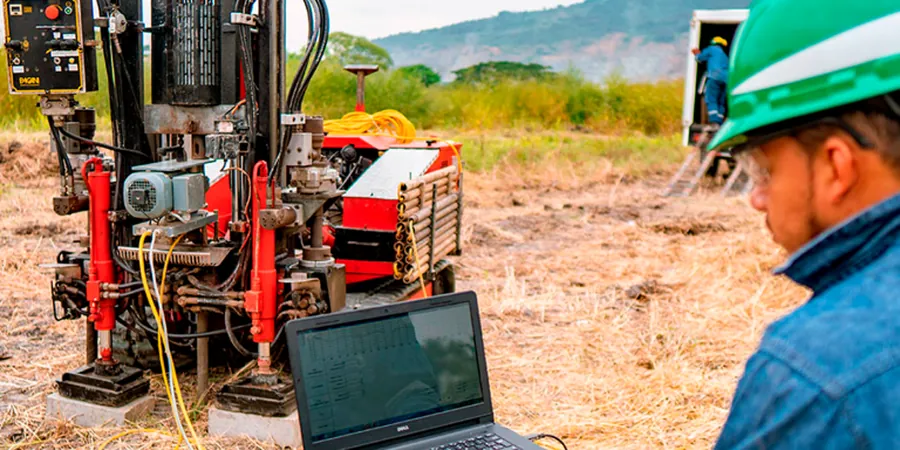
We were called to a site near the Manukau Harbour where a 4-story apartment block was planned. The topsoil looked fine. But below two meters, we hit a layer of soft estuarine clay. That is where the field vane shear test became essential. Without it, the foundation design would have been guesswork. Auckland has many such zones, especially around the isthmus and former wetlands. The vane shear test provides a direct measure of undrained shear strength in these soft deposits. That data is critical for bearing capacity and slope stability calculations. We often run it alongside a corte directo to cross-check parameters before finalizing the geotechnical model.
Soft clays in Auckland can have sensitivities above 8. A vane test catches that before the foundation is designed for the wrong strength.
Method and coverage
A common mistake we see in Auckland is relying solely on SPT N-values for soft clays. The SPT hammer can punch through these layers, giving misleading results. The field vane shear test avoids that problem entirely. It measures the remoulded and peak strength in situ. The procedure follows NZS 4402. We push the vane to the target depth, rotate it at a standard rate, and record the torque. The equipment is lightweight, so we can test in tight urban sites. In Auckland we often pair this test with a corte directo to get both peak and residual values for the same soil unit. The key parameters we report include:
Peak undrained shear strength (su)
Remoulded strength (sur)
Sensitivity (St = su/sur)
Torque at failure (N·m)
Technical reference image — Auckland
Regional considerations
The volcanic soils of Auckland are well known. But the soft marine and estuarine clays that fill the old river valleys are what cause most foundation problems. These clays have low undrained shear strength, sometimes below 15 kPa. A building on such ground without proper vane shear testing can settle unevenly or even suffer a rotational failure. The sensitivity of these clays means they lose strength rapidly when disturbed. A vane test quantifies that loss. We also use it to check the improvement after ground treatment. In one project near the waterfront, we tested before and after installing vertical drains. The vane data confirmed the strength gain.
Full execution of the vane test per NZS 4402. Includes setup, insertion, rotation, and data recording. We deliver peak and remoulded strength profiles.
02
Sensitivity Profiling
We perform multiple vane rotations at each depth to measure the strength loss. This is critical for clays with sensitivity above 4. Common in the Pukekohe and Manurewa areas.
03
Post-Treatment Verification
After Improvement works like preloading or stone columns, we re-test with the vane to confirm the target undrained shear strength has been reached.
Standards that apply
NZS 4402 Standard Test Method for Field Vane Shear Test, NZS 3404 Steel Structures Standard (reference for foundation design in soft soils), NZGS Guidelines for the Safe Use of the Field Vane in New Zealand
FAQ
What is the difference between a field vane test and a lab triaxial test?
The vane test measures undrained shear strength in place, right where the soil sits. A triaxial test requires undisturbed samples that can get disturbed during transport. For soft Auckland clays, the vane often gives lower and more realistic values than triaxial tests on block samples.
How much does a field vane shear test cost in Auckland?
The typical cost for a standard vane test at one depth, including mobilization within the Auckland metro area, ranges between NZ$1.080 and NZ$2.270. The final price depends on the number of test locations, depth, and site access conditions.
Can the vane test be used in peat or organic soils?
Yes. Peat is one of the best materials for the vane test because it is so soft. We have used it in the peat bogs of the Waikato region and on the Waitemata Harbour foreshore. The key is to use a larger vane blade (55 mm x 110 mm) to get a reliable torque reading.
Do I need a vane test for a residential house in Auckland?
It depends on the ground conditions. If the house is on stiff volcanic soil from the Auckland Volcanic Field, you likely do not need it. But for sites on the isthmus or near the coast where soft clays are present, the vane test is the most direct way to get the design strength for shallow or deep foundations.
Location and service area
We serve projects across Auckland and surrounding areas.