Seismic engineering in Auckland addresses the critical need to understand and mitigate earthquake risks in New Zealand's largest urban centre. While the city is not located directly on the country's most active plate boundary, it remains vulnerable to strong ground shaking from distant sources such as the Alpine Fault and the Hikurangi subduction zone. The region's unique geological setting, combined with a dense urban fabric and varied building stock, makes comprehensive seismic assessment essential for protecting lives, infrastructure, and economic resilience. This category encompasses a range of specialised services from seismic microzonation to advanced structural design, all aimed at characterising local ground behaviour and reducing earthquake impacts.
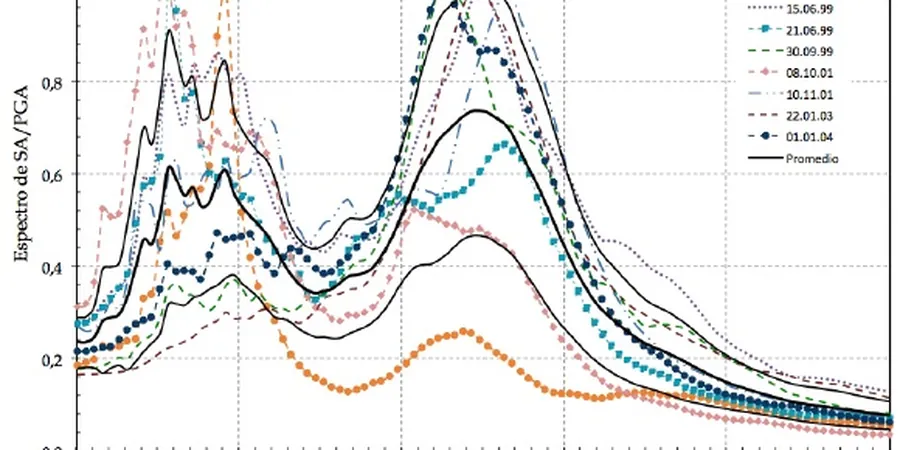
Auckland's geological foundation is dominated by the Waitemata Group sandstones and siltstones, overlain in many areas by softer alluvial deposits, volcanic ash layers, and reclaimed coastal land. These near-surface materials can significantly amplify seismic waves, particularly at certain frequency ranges that coincide with the natural periods of common building types. The variability in soil stiffness and depth across the isthmus creates complex patterns of ground motion that standard code provisions may not fully capture. This is where site-specific investigations become crucial, with site response analysis enabling engineers to quantify how local soil columns will modify incoming bedrock motions and influence surface shaking intensity.
The regulatory framework for seismic design in New Zealand is governed by the Building Act 2004 and the New Zealand Building Code, which references NZS 1170.5:2004 Structural design actions – Earthquake actions. This standard defines seismic hazard factors, site subsoil classifications, and structural performance requirements that all new buildings must meet. For existing structures, the Building (Earthquake-prone Buildings) Amendment Act 2016 mandates assessment and strengthening within specified timeframes based on territorial authority priorities. Auckland Council's Unitary Plan also incorporates geotechnical considerations, requiring site-specific seismic studies for major developments, critical facilities, and structures on problematic soils. Engineers must navigate these requirements while considering the latest updates to the National Seismic Hazard Model, which continues to refine our understanding of regional seismicity.
Projects that demand specialised seismic input range from high-rise commercial towers and hospital buildings to port facilities and major infrastructure corridors. The growing adoption of performance-based design approaches has increased the need for rigorous seismic amplification analysis to justify design spectra that deviate from code-standard values. Similarly, innovative structural solutions such as base isolation seismic design are being employed on landmark projects to achieve higher resilience levels, particularly where post-earthquake functionality is essential. Residential developments on sloping sites or in areas of known paleoseismic activity also require careful evaluation to manage land instability risks during shaking events.
Auckland faces a complex seismic risk profile dominated by distant large-magnitude events from the Alpine Fault and Hikurangi subduction zone, rather than frequent local crustal earthquakes. The city's soft sedimentary basins and volcanic deposits amplify long-period ground motions, which particularly affect taller structures. Unlike Wellington or Christchurch, Auckland has not experienced a devastating earthquake in recent history, but this does not reduce the need for robust design, as the region's exposure and vulnerability remain high due to population density and infrastructure concentration.
A site-specific seismic study is typically required for buildings classified as Importance Level 3 or 4 under NZS 1170.0, such as hospitals, emergency response facilities, and major public venues. It is also mandated for structures on soft or variable soils, slopes steeper than 15 degrees, and any project proposing performance-based design that deviates from standard code spectra. The Auckland Unitary Plan may trigger additional requirements for developments in coastal hazard zones or areas identified with geotechnical constraints, where ground motion amplification and liquefaction potential must be rigorously assessed.
Seismic microzonation provides detailed maps of ground shaking potential, liquefaction susceptibility, and landslide risk at a suburb or precinct scale, allowing planners and developers to make informed decisions about land use and foundation design. In Auckland, where geological conditions can change abruptly over short distances, these studies help identify areas where code-based site classifications may be overly conservative or insufficient. The results guide zoning provisions, infrastructure investment, and prioritisation of seismic strengthening programmes for existing building stock.
Base isolation decouples a structure from ground motion by introducing flexible bearings at foundation level, significantly reducing seismic forces transferred to the superstructure. In Auckland, it is particularly advantageous for critical facilities, heritage buildings requiring non-invasive retrofit, and new structures where enhanced post-earthquake functionality is desired. However, it is not universally applicable; the technique requires a site with suitable soil conditions, a regular building configuration, and careful detailing of utilities and services crossing the isolation plane. Cost and long-term maintenance must also be weighed against performance benefits.