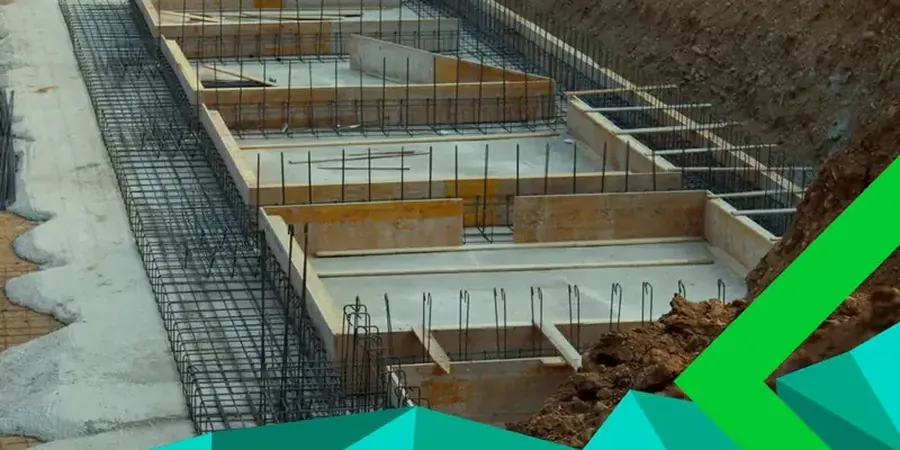
A common mistake we see with builders new to Auckland is assuming the ground under a site is uniform. You can't just dig down a meter and call it bearing – not in this city. Auckland's geology is a patchwork of young basalt flows, old alluvial terraces, and soft marine clays from the Waitemata Group. Without a proper investigation, a shallow foundation design becomes guesswork. We've seen houses settle unevenly because nobody checked for a buried volcanic ash layer. That's why we always start with a targeted site investigation, combining test pits for visual classification with SPT borings to measure resistance directly. Only then do we assign a bearing capacity you can trust.
We've seen houses settle unevenly because nobody checked for a buried volcanic ash layer. Only then do we assign a bearing capacity you can trust.
Method and coverage
Auckland's rapid expansion since the 1950s pushed development onto marginal land – former swamps, reclaimed estuaries, and steep volcanic slopes. The geotechnical impact is real: these areas often have soft compressible soils or shallow groundwater. For a reliable shallow foundation design, we need to understand three things: soil stratigraphy, groundwater conditions, and the site's seismic class. The city sits in a moderate seismic zone, so NZS 4203 requirements for ductility and settlement control apply. We typically run Atterberg limits to classify plasticity, Proctor compaction tests to assess fill quality, and occasionally plate load tests for direct modulus measurement. The goal is always the same – design a footing system that spreads the load without exceeding tolerable settlement.
Technical reference image — Auckland
Regional considerations
We worked on a three-story apartment building in Ponsonby a few years back. The architect wanted strip footings along the perimeter, but the site had a buried peat layer about two meters down – left over from an old creek channel. The contractor had already started excavation when we flagged the risk. If they had poured footings directly on that peat, differential settlement would have cracked the facade within months. We redesigned the shallow foundation system, deepening the footings into a stiff volcanic ash layer and adding a reinforced raft section over the soft zone. That project taught us: never trust a uniform soil profile in Auckland without checking the full stratigraphy first.
100 – 300 kPa depending on soil type and SPT N-value
Maximum total settlement
25 mm for shallow footings on sand; 40 mm on clay (NZS 4203)
Factor of safety for bearing capacity
3.0 (undrained) / 2.5 (drained) – per NZGS guidelines
Groundwater depth consideration
Must be below footing base or accounted for in uplift/buoyancy design
Related services
01
Site Investigation & Soil Classification
Test pits, SPT borings, and laboratory classification (Atterberg limits, grain size, moisture content) to build a reliable soil profile.
02
Bearing Capacity & Settlement Analysis
Calculations using Terzaghi, Meyerhof, and Vesic methods, calibrated with local soil data and NZS 4203 settlement criteria.
03
Foundation Design Review & Optimization
We review existing designs, suggest alternative footing types (strip, pad, raft), and optimize dimensions to reduce concrete volume while meeting code requirements.
Standards that apply
NZS 4203:1992 (General structural design and design loadings), NZS 3404:1997 (Steel structures – foundation interaction), NZGS Guidelines for Shallow Foundation Design on Expansive Soils (2016)
Process video
FAQ
What is the typical bearing capacity for shallow foundations in Auckland volcanic soils?
For basalt-derived residual soils, we often see allowable bearing capacities between 150 and 300 kPa. Alluvial clays and peats drop to 50–100 kPa. Final values depend on SPT N-values and groundwater conditions.
How deep should shallow footings be in Auckland to avoid frost or expansive clay movement?
Frost depth is negligible in Auckland, but expansive clays require at least 400 mm depth. For non-expansive soils, 300 mm is common. We always check the soil's plasticity index first.
What is the cost range for a shallow foundation design report in Auckland?
A typical design report including site investigation and bearing capacity analysis ranges from NZ$3,300 to NZ$5,960. The final cost depends on site complexity and number of boreholes required.
Do I need a separate liquefaction assessment for shallow foundations in Auckland?
Yes, if the site has loose saturated sands or silts. Auckland's seismic hazard is moderate, but liquefaction can occur in reclaimed areas like the Viaduct Basin. We assess this using Youd-Idriss (2001) methodology.
Can I use a simple strip footing on a sloping site in Auckland?
Often yes, but the footing must be stepped or keyed into the slope to prevent sliding. We also check for potential creep in weathered volcanic ash. A geotechnical report is essential before designing the foundation layout.