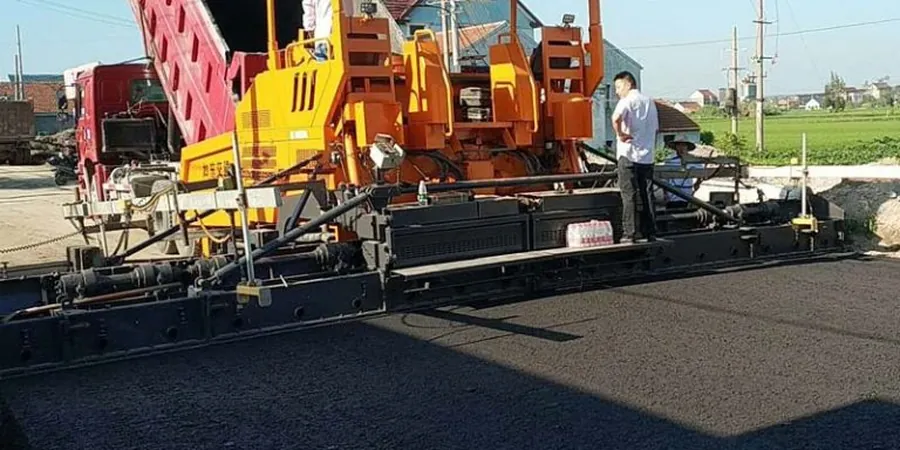
Auckland sits on the Auckland Volcanic Field, with over 50 eruption centers scattered across the isthmus. This volcanic legacy means the subgrade varies dramatically — from soft alluvial clays in the CBD to weathered basalt on the North Shore. For flexible pavement design, understanding that variability is everything. Our team has tested hundreds of sites across Auckland, correlating CBR values with local geology to produce realistic design inputs. We combine this with geotechnical site investigation to map soil layers, and CBR testing to measure subgrade strength directly. Without this data, flexible pavement design in Auckland becomes guesswork, and guesswork leads to premature failure.
In Auckland, the difference between a site in Ponsonby and one in Papakura can be night and day for flexible pavement design.
Method and coverage
A common mistake we see is assuming a uniform subgrade across the entire road corridor. In Auckland, the difference between a site in Ponsonby and one in Papakura can be night and day — the former often has residual volcanic soils, the latter deep alluvial deposits. For flexible pavement design, we always run a dynamic cone penetrometer survey to map strength variations along the alignment. Then we layer in traffic load spectra from NZ Transport Agency Waka Kotahi data. The real skill is matching the pavement layers — basecourse, subbase, and selected subgrade — to the actual performance of local materials. We use the Austroads mechanistic-empirical method, calibrated with Auckland-specific deflection data from Falling Weight Deflectometer campaigns.
Technical reference image — Auckland
Regional considerations
Take a road in the volcanic soils of Mount Eden versus one in the peat swamps of Mangere. On Mount Eden, the subgrade might be stiff enough to reduce pavement thickness by 40%. In Mangere, organic soils can settle under traffic loads, causing differential cracking. Without proper flexible pavement design that accounts for these local extremes, you get rutting within two years or reflective cracking from the subgrade up. We've seen both. That's why we always recommend a site-specific investigation before committing to a pavement structure.
We conduct field and laboratory CBR tests, dynamic cone penetrometer surveys, and classification testing to characterize the subgrade. This provides the foundation for all subsequent pavement design decisions.
02
Pavement Structural Design
Using Austroads mechanistic-empirical methods, we determine layer thicknesses for basecourse, subbase, and asphalt or chip seal surfaces. We optimize for both cost and long-term performance under Auckland's traffic loading.
03
Construction Verification & Quality Control
During construction, we perform field density tests, plate load tests, and deflection monitoring to confirm that the pavement is built to design specification. This reduces the risk of claims and extends pavement life.
Standards that apply
Austroads Guide to Pavement Technology (AGPT, 2022), NZS 4404:2010 Land Development and Subdivision Infrastructure, NZS 4402 (CBR test), AASHTO T 307-99 (Resilient Modulus)
FAQ
What is the typical design life for flexible pavements in Auckland?
Most local authorities require a 20-year design life for residential streets and 40 years for arterial roads. Our designs meet or exceed these targets, provided the subgrade is properly prepared.
How do you account for volcanic soils in pavement design?
Volcanic soils in Auckland, like the brown tephra on the North Shore, often have high CBR values but can be brittle under repeated loading. We test resilient modulus to capture this behavior, and adjust the fatigue criterion accordingly.
Do you provide pavement design for both asphalt and chip seal surfaces?
Yes, we design for both. Asphalt is common in high-traffic urban areas, while chip seals are cost-effective for rural and suburban roads. Our design method selects the appropriate surfacing based on traffic volume and budget.
What is the typical cost range for a flexible pavement design study in Auckland?
For a standard residential subdivision, expect between NZ$2.870 and NZ$7.460 depending on the number of test pits, CBR tests, and complexity of the geology. Contact us for a project-specific quotation.
How long does a flexible pavement design project take?
From site investigation to final report, a typical project takes 2 to 4 weeks. If we already have existing geotechnical data for your site, we can reduce that timeline significantly.
Location and service area
We serve projects across Auckland and surrounding areas.